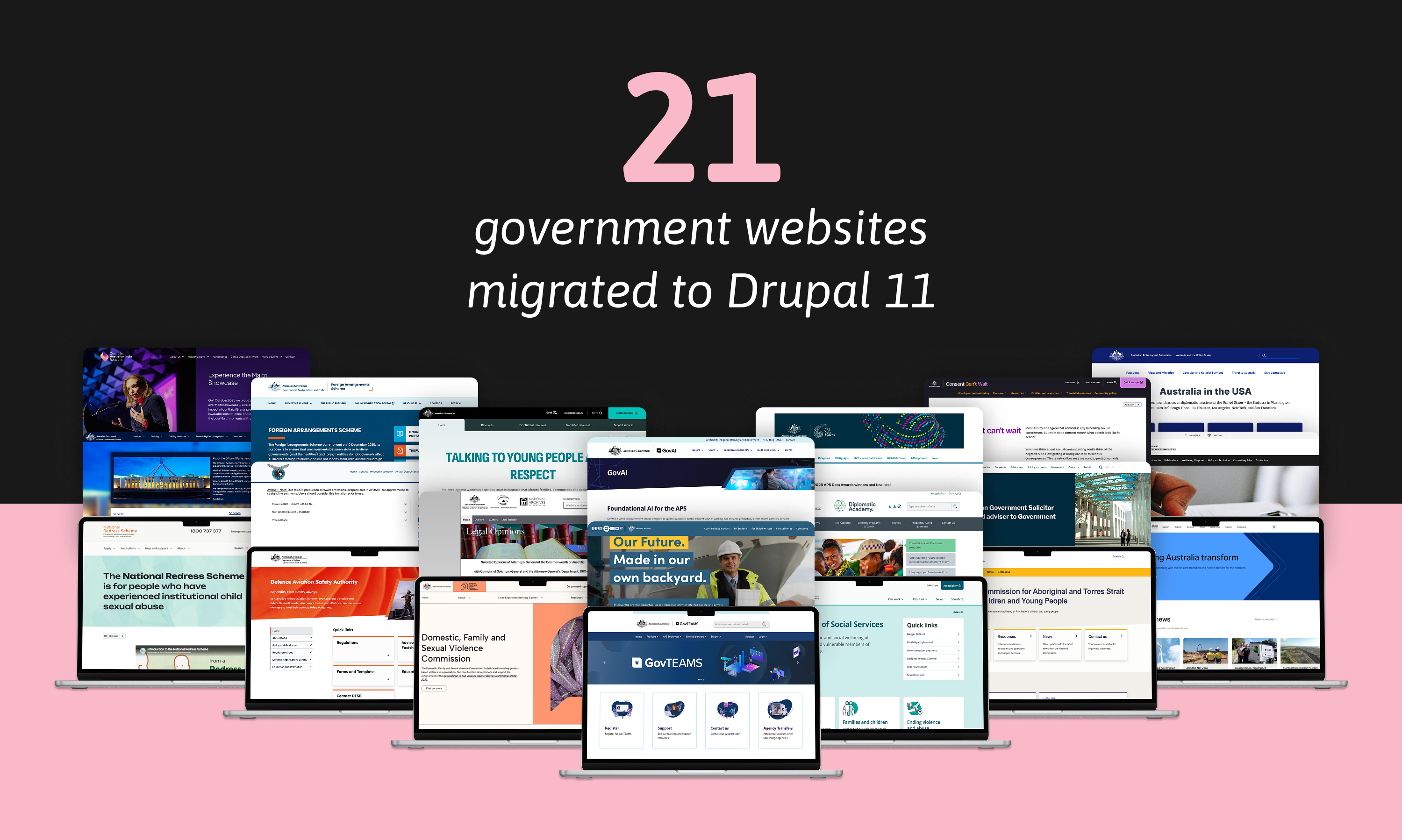
Out with the old, in with the new
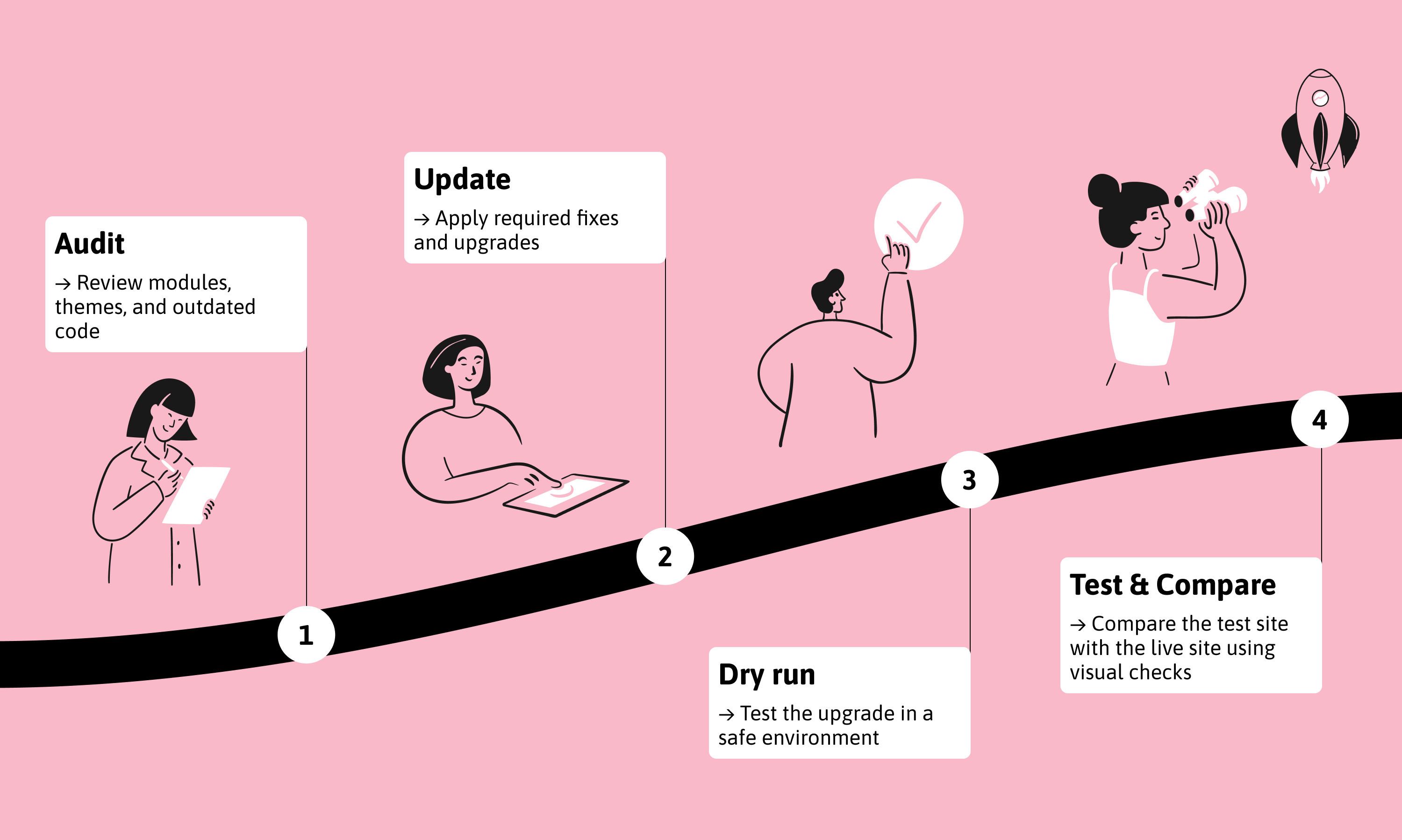
For each site assigned to us, we conducted a thorough audit of all installed modules and themes to identify deprecated, unsupported, or incompatible code ahead of the Drupal 11 transition. Where modules were flagged for removal from the GovCMS distribution, such as GovCMS8 UIkit, our team assessed the impact on site functionality and implemented compatible replacements using supported Drupal 11 approaches, including Layout Builder, Twig templating, and core configuration patterns
Remediating beyond module removal
But this wasn’t as simple as just removing outdated modules.
For content types built on deprecated modules such as Panelizer, we carried out structured migration work to ensure existing content remained intact, editable, and correctly rendered after the transition.
Where module replacement required changes to themes, templates, or layout components, we updated and reconfigured these to ensure affected sites were maintainable and aligned with GovCMS distribution standards.
For themes that were identified as technical debt, the work depended on the deprecated theme. For instance:
- Bartik was replaced with the compatible Drupal contributed theme. Blocks, layouts and styles were replicated to ensure visual parity with the original site.
- For sites running the GovCMS8 UIkit starter theme, we migrated to Bootstrap based custom themes, rebuilding layouts in Twig, updating components to Bootstrap conventions, and validating all content types and view modes rendered correctly within the new theme structure.
Throughout these activities, we worked closely with agency teams to minimise disruption and ensure any changes to the content editing experience were clearly communicated and supported with documentation.